
 TOP 5 New Key Comics This Week 7-15-26
LAST WEEK’S Top 5 New Key Comics 7-8-26
TOP 5 New Key Comics This Wednesday
Before getting into this week’s Top 5 New Key Comics, I’m proud to share the release of my first book, The Beginner’s Guide to Comic Investing: How to Spot Trends in Comics Before Everyone Else. The book breaks down comic speculation, first appearances, market awareness, emerging trends, and the thought process behind making more informed collecting decisions. It is available now in paperback and as a Kindle eBook on Amazon right here  Amazon
Clicking any red-highlighted link or comic book cover may direct you to eBay or another third-party marketplace where the item may be available for purchase. Please use your own judgment before buying. Always review the seller’s rating, feedback, item description, photos, shipping terms, and return policy before completing any transaction. InvestComics does not sell these items directly, does not control third-party listings, and is not responsible for any transaction, seller, product condition, shipping issue, refund, or dispute. InvestComics does not endorse any individual seller or listing. InvestComics participates in the eBay Partner Network and may receive compensation from qualifying purchases made through affiliate links on this site.
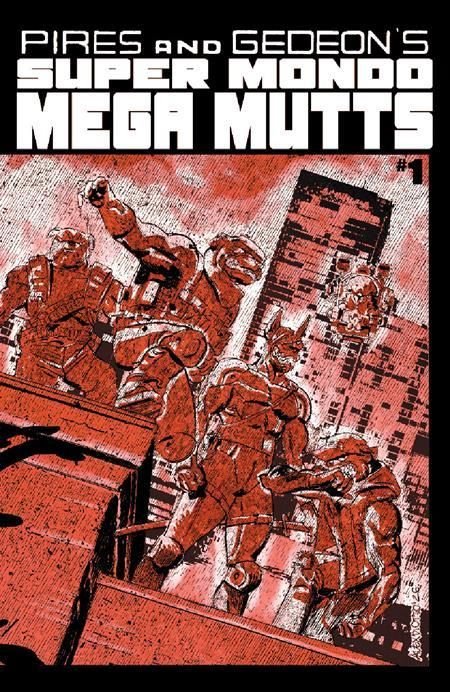 Super Mondo Mega Mutts #1
Creators: Writer Curt Pires; artist Juan Gedeon
Original properties deserve attention because they begin without decades of back issues, continuity, adaptations, or previously established collector demand. Super Mondo Mega Mutts #1 introduces an entirely new universe from writer Curt Pires and artist Juan Gedeon, making this the first comic-book appearance of the Super Mondo Mega Mutts and their supporting mythology.
The new team consists of Wolf, Frankee, Griffy, and Freddy, four radically transformed dogs operating alongside their mentor, Mojo. The characters patrol a city controlled by corrupt federal forces and criminal gangs armed with stolen alien technology. That gives collectors multiple first appearances in one issue rather than a single background character arriving for three panels before disappearing into publishing storage for six years.
For speculation purposes, this is the most traditional key-comic candidate in the group. It is a number-one issue featuring the introduction of an original team, an original supporting character, a new fictional world, and a concept that can potentially expand beyond its opening storyline. Every principal character begins here. Should Oni Press build the property through sequels, collected editions, merchandise, animation, games, or other media, collectors would naturally return to Super Mondo Mega Mutts #1 as the starting point.
That possibility should still be approached with restraint. Independent and creator-driven comics launch constantly, and many arrive with attractive concepts, extensive cover programs, and enthusiastic promotional language. The important questions concern whether the characters develop recognizable personalities, whether the series builds a loyal audience, and whether the property continues beyond its initial promotional push. A first appearance has more lasting relevance when people still care about the character after the first issue leaves the new-release shelf.
Curt Pires has been building attention through projects including Lost Fantasy and Fireborn, while Juan Gedeon brings a visual style well suited to transformed animals, science-fiction chaos, and oversized action. The combination gives the debut a creative identity beyond the premise alone. Oni Press is positioning the title as a major launch, which can increase awareness but may also increase the number of copies and variants entering the market. That familiar equation means collectors should pay attention to actual demand rather than confusing abundant supply with instant scarcity.
The strongest collecting argument remains simple: this is the first appearance of Wolf, Frankee, Griffy, Freddy, Mojo, and the Super Mondo Mega Mutts as a team. Among the Top 5 New Key Comics This Week, it offers the largest concentration of completely original first appearances and the cleanest ground-floor speculation opportunity.
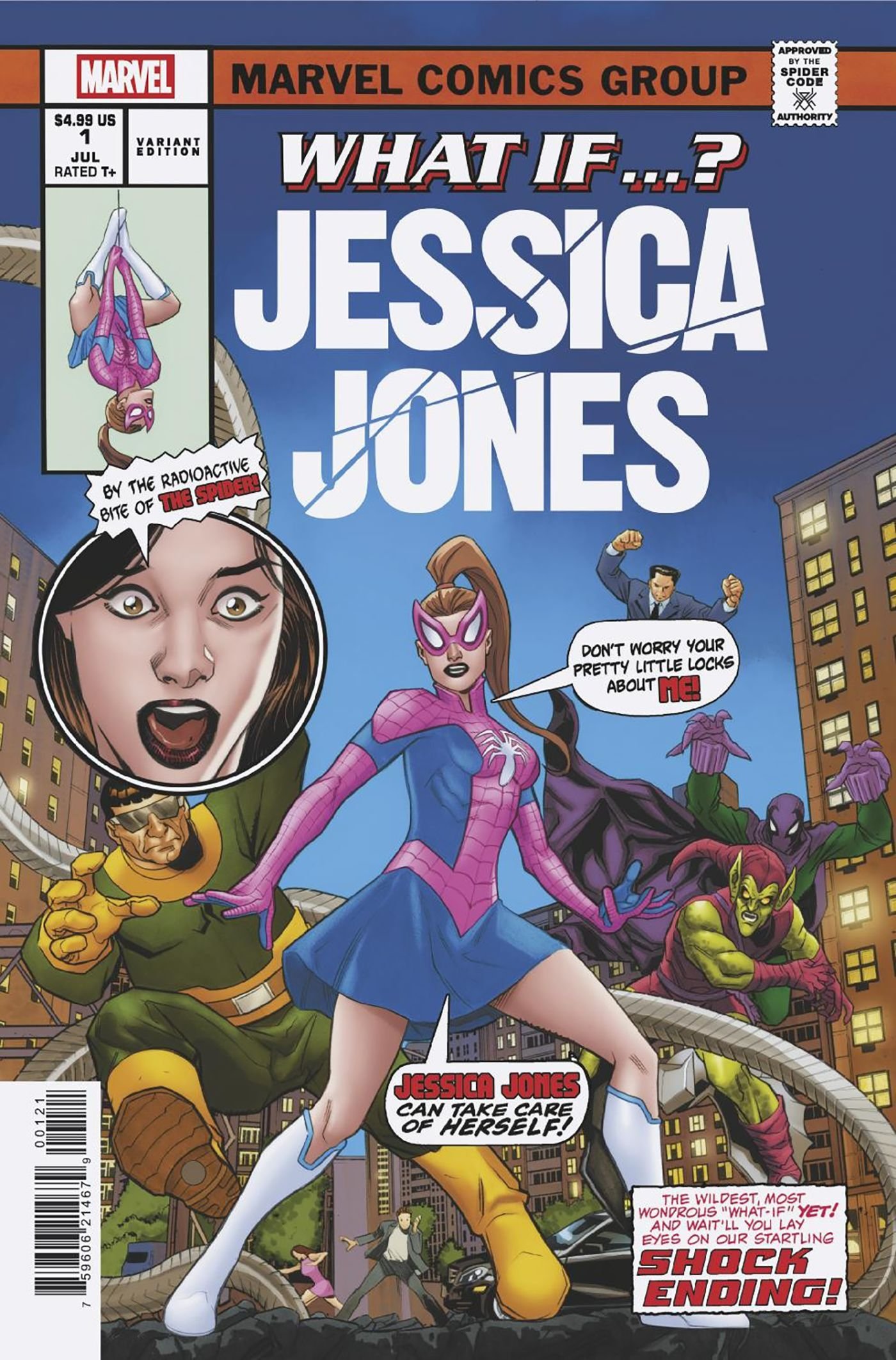 What If…? Jessica Jones #1
Creators: Writer Justina Ireland; artist David Messina
Marvel’s alternate realities have produced countless transformed heroes, unusual identities, and costume variations. Some remain temporary curiosities, while others eventually develop into characters with devoted collector followings. What If…? Jessica Jones #1 introduces a new version of Jessica Jones whose life changed after she was bitten by the radioactive spider instead of Peter Parker.
In this alternate continuity, Jessica became Spider-Girl before retiring from superhero activity and attempting to leave that period of her life behind. Her plans become considerably less convenient when a figure connected to her past resurfaces and the possibility of the Green Goblin’s return forces her back into action. Justina Ireland writes the one-shot with artwork by David Messina.
The primary key-comic angle is the first appearance of this Spider-powered Jessica Jones. This is not Jessica merely borrowing a costume for a cover image or appearing in a brief fantasy sequence. The issue establishes an alternate history, superhero identity, costume, supporting circumstances, and personal connection to the Spider-Man mythology. That gives collectors a clearly identifiable alternate-character debut.
Spider-related transformations remain one of Marvel’s most frequently revisited concepts because they are easy to recognize, visually adaptable, and naturally suited to toys, animation, games, and multiverse stories. That does not mean every newly created Spider-variant will become Spider-Gwen, Miles Morales, or Spider-Punk. Marvel has introduced enough alternate Spider-people to populate a large city with nothing but webbing and trademark applications. Still, a first full appearance of a distinct Jessica Jones Spider-hero belongs on the speculation radar.
The character also benefits from combining two established areas of Marvel interest. Jessica Jones has a strong identity outside traditional superhero conventions, while Spider-Man remains one of the largest character brands in comics. Bringing those elements together creates potential interest from Spider-character collectors, Jessica Jones collectors, What If collectors, costume collectors, and fans who specialize in alternate-universe debuts.
The long-term question is whether this Spider-Girl version of Jessica Jones appears again. A single one-shot can become more important when Marvel later brings the character into a multiverse event, animated project, game, team book, or future Spider-Verse storyline. Without follow-up appearances, the issue may remain an unusual standalone key. With continued development, collectors will identify What If…? Jessica Jones #1 as the character’s origin and first appearance.
For the Top 5 New Key Comics This Week, this issue represents the alternate-character speculation selection: a recognizable Marvel hero, a new Spider identity, and a first appearance with enough visual distinction to remain easy for the market to identify.
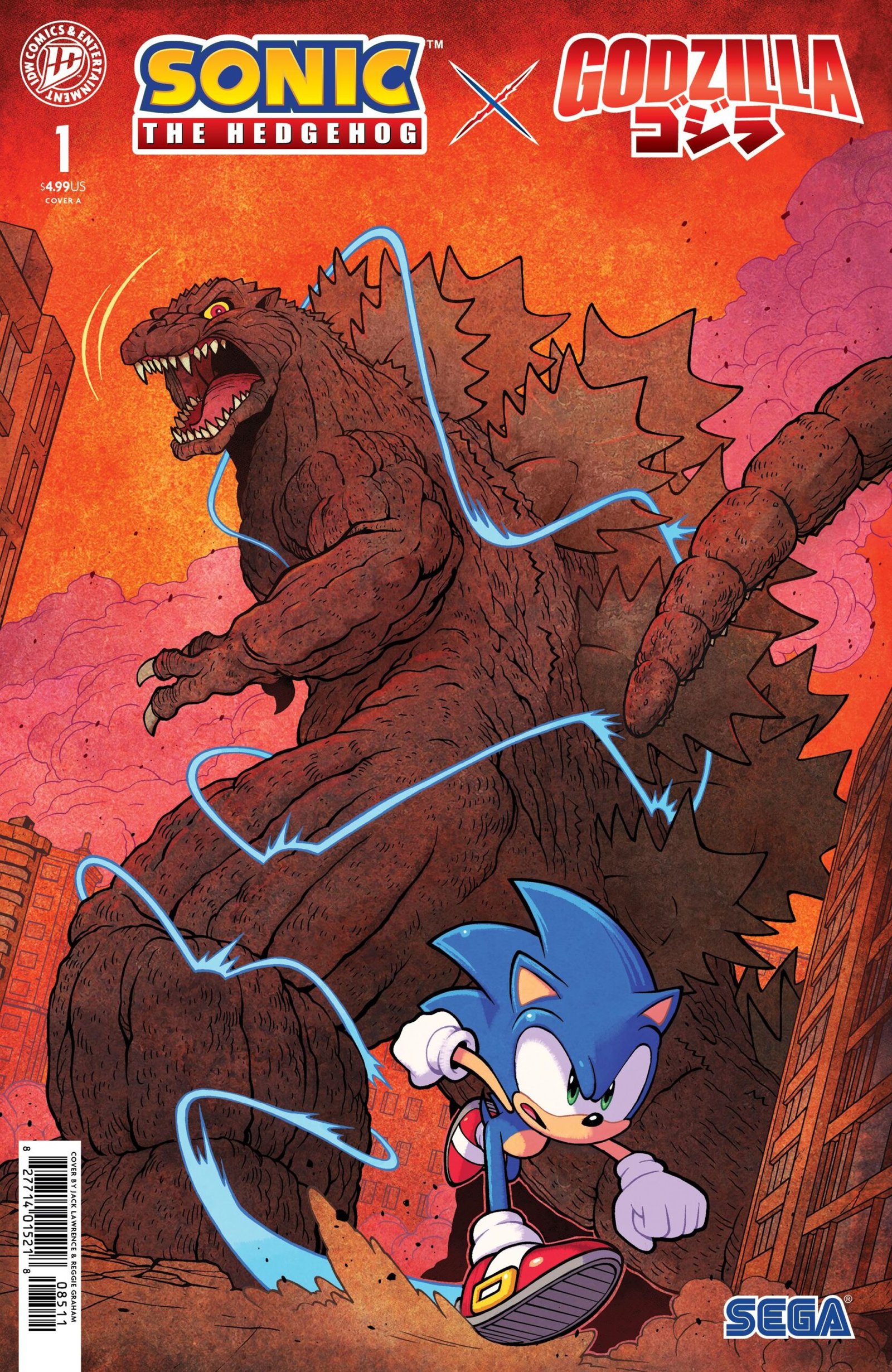 Sonic the Hedgehog x Godzilla #1
Creators: Writer Nick Marino; artist Jack Lawrence
Some crossover comics seem so improbable that their existence becomes their greatest collecting feature. Sonic the Hedgehog x Godzilla #1 officially brings Sonic and Godzilla together in comic books for the first time, creating a landmark meeting between two internationally recognized entertainment franchises.
The five-issue IDW Publishing miniseries is written by Nick Marino with artwork by Jack Lawrence. Godzilla and other kaiju enter Sonic’s universe, forcing Sonic and his allies to confront a threat that cannot simply be handled with another fast lap around the landscape. The series also arrives as part of Sonic’s thirty-fifth-anniversary period, giving the project an additional promotional connection to the franchise’s history.
The key status here is not based on the first appearance of Sonic or Godzilla. Those distinctions belong to significantly older and substantially more expensive comics. Instead, Sonic the Hedgehog x Godzilla #1 marks their first official comic-book crossover and first encounter. Crossover firsts occupy a separate category of collecting because their appeal depends on the combination of established fan bases rather than the creation of an entirely new hero or villain.
This type of comic can maintain interest because it functions as a historical oddity even after the miniseries concludes. Sonic collectors may want the first meeting. Godzilla collectors may want the first meeting. IDW collectors, Sega fans, kaiju enthusiasts, video-game collectors, and licensed-crossover specialists may all approach the same issue from different directions. That broad audience gives the comic more potential sources of demand than a typical licensed release.
The risk is equally obvious. Major crossover launches often receive large orders and extensive variant programs because retailers already recognize the properties involved. A famous combination does not automatically create a scarce comic. Collectors should distinguish the importance of the event from the availability of the individual edition they are purchasing. The standard cover may become the version most widely recognized, while lower-order incentives or convention editions may attract collectors who prefer scarcity. Paying an inflated opening-week premium merely because Godzilla is standing behind Sonic is still paying an inflated opening-week premium, even when the visual makes perfect sense by comic-book standards.
The strongest argument for the issue is its permanent place in the publication histories of both properties. Regardless of later market performance, collectors will identify Sonic the Hedgehog x Godzilla #1 as the first comic in which these franchises officially collided.
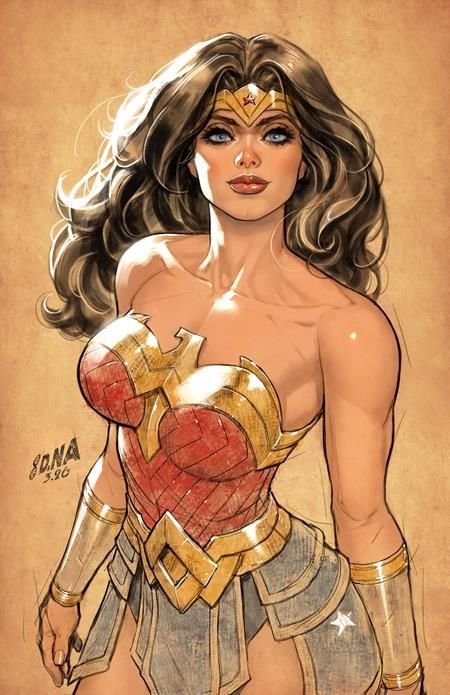
Wonder Woman #35
Creators: Writer Stephanie Williams; artist Clayton Henry
A creator change on a long-running superhero title can be more significant than the issue number initially suggests. Wonder Woman #35 brings writer Stephanie Williams and artist Clayton Henry together for the beginning of a two-issue story that revisits Diana’s transformation into Wonder Woman from a different perspective.
Following a sacrifice involving the Fates, Steve Trevor and Trinity travel through time in an effort to reach the Matriarch before her campaign begins. During that journey, Steve recounts Diana’s origin through his own perspective, presenting familiar history through a new narrative lens while connecting the past to the title’s developing future.
The first-related significance comes from the new creative pairing and this newly presented version of Wonder Woman’s origin. Stephanie Williams begins her two-issue contribution with Clayton Henry on artwork, making Wonder Woman #35 the first issue of their Wonder Woman storyline together. Williams has previously contributed extensively to the development of DC’s Amazon mythology, which makes her involvement particularly relevant when the issue turns toward Diana’s history and Themysciran culture
Origin retellings occupy an unusual place in comic collecting. They do not always introduce a new character, but they can become important when later stories treat the revised material as established continuity. A newly introduced detail, relationship, Amazon tradition, historical event, or interpretation can eventually give an otherwise ordinary issue greater relevance. Collectors should therefore pay attention to what this chapter adds rather than assuming that another version of Wonder Woman’s origin is automatically interchangeable with every previous account.
The Matriarch storyline also creates a potential connection between Diana’s past and Trinity’s future. If this issue introduces information that becomes central to Trinity, Steve Trevor, the Matriarch, or later Amazon stories, Wonder Woman #35 could gain significance beyond its current placement as the opening chapter of a two-part creative-team change.
This is the quieter speculation choice among the five. It does not arrive with the obvious number-one branding of a launch or the immediate first appearance of an entire superhero team. Instead, its appeal depends on new creators, a different origin presentation, possible continuity additions, and the future importance of the Matriarch storyline. Sometimes the market overlooks comics like this because the cover does not politely print “important continuity may be hiding inside” across the top.
Collectors following Wonder Woman, Trinity, DC’s Amazons, and the evolving history of Diana should keep Wonder Woman #35 on their radar. It represents a new writer-and-artist collaboration and a newly framed account of one of DC’s foundational origins.
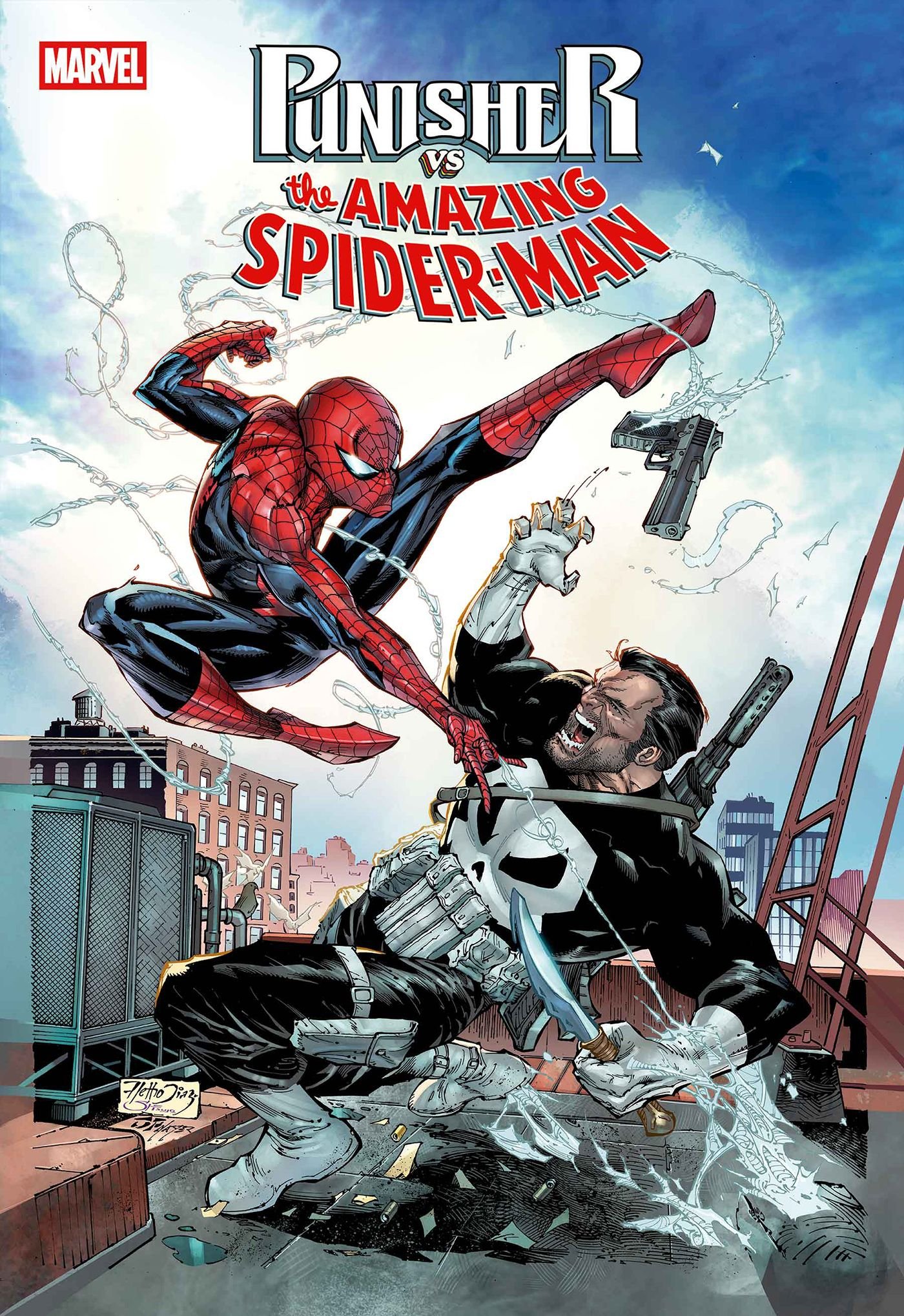 Punisher vs. Spider-Man #1
Creators: Writer Dan Abnett; artist Matteo Della Fonte
The relationship between Spider-Man and the Punisher began with Frank Castle’s debut in The Amazing Spider-Man #129, one of the most recognizable Bronze Age Marvel keys. Punisher vs. Spider-Man #1 returns to the period shortly after that historic introduction and adds previously untold encounters to the early history between Peter Parker and Frank Castle.
The five-issue limited series is written by Dan Abnett with artwork by Matteo Della Fonte. Rather than placing the characters in present-day continuity, the story revisits an earlier Marvel era when the Punisher was still a relatively new figure and Spider-Man had not yet accumulated several decades of reasons to question Frank Castle’s methods.
The speculative appeal rests on retroactive continuity. This issue does not replace The Amazing Spider-Man #129, nor does it become the first meeting between the characters. It expands the period following that initial confrontation by presenting additional early encounters. Collectors should watch for newly introduced villains, supporting characters, weapons, organizations, or historical details that could establish separate first appearances within the miniseries.
Retroactive stories can become collectible when they add a character or event that later appears in modern continuity. Marvel has repeatedly returned to earlier periods to fill unexplored gaps, and the strongest issues from those projects are usually the ones that introduce something capable of surviving beyond the nostalgia. The presence of a newly created antagonist or previously unknown figure would be considerably more important for speculation than another disagreement over whether criminals should be webbed to a wall or permanently removed from future scheduling conflicts.
The timing also gives the project additional visibility. Spider-Man and the Punisher remain major Marvel properties, and their contrasting philosophies have always generated a natural conflict. Dan Abnett’s previous experience with Punisher material gives the historical setup credibility, while Matteo Della Fonte begins a prominent Marvel assignment centered on two immediately recognizable characters.
For collectors, Punisher vs. Spider-Man #1 should be evaluated as the opening chapter of a continuity-expanding miniseries rather than treated as a replacement for an established Bronze Age key. Its ultimate significance will depend on what the series introduces and whether those additions matter after the fifth issue. It remains a strong selection for the Top 5 New Key Comics This Week because retroactive first appearances and early-history revelations can easily be overlooked until Marvel decides to use them again.
Top 5 New Key Comics This Week 7-15-26
-Jay Katz